Mining in Prehistoric Times
Once we enter La Donaira our view opens up, we see the farmhouse and behind it, a majestic forest of stone oaks covers the Sierra de Malaver with intense green. Sovereign and seemingly inaccessible, in ancient times it laid bare its deepest secrets - minerals.
This sierra is a geological rarity, a diverse conglomerate of rocks, salt springs and minerals like malachite, azurite, iron, copper, lime, ochre, gypsum, silex and other rocks for making polished tools. The geological characteristics of the sierra made it easy to extract these resources, which began to be exploited in prehistoric times and ended in the 20th century.
There are few mining sites as unique as the Sierra de Malaver.
The sierra is full of galleries, some of which have their entrances near the trails and go deep into the mountain.
Stairways descend into the mineral world, turning the surroundings dark and mysterious.
Maybe the metals radiated some energy that attracted the prehistoric people. They left their mark on this mountain using these natural resources and turning the exploitation into the most extensive silex operation of the Betica and the most important silex workshop in Andalusia.
They also extracted ochre to protect their skins from the sun, copper to make specific tools and create amulets to hear the mountain and make their way into it. So evident were the colours removed from the surface, that the Romans went deeper and extracted lead, iron and silver.
Making the site an important point connected by a road to the Roman city of Acinipo and the nearby walled settlement of La Silla del Moro.
These three resources would continue to be exploited throughout the Middle Ages and into the contemporary period, where low profitability would put an end to the activity.
All these civilisations, including the Iberians, created settlements related to mining activities, most of them are not visible to the common human being, but they are there, under the heaps of mineral slag and the passage of time - structures such as dolmens, smelting shafts, huts, washing ponds, canalizations or galleries. A rich heritage of which traces are interpreted from La Donaira to Las Alcaurías.
Today, the mineral kingdom is still steeped in mysticism.
For Rudolf Steiner, ”Within the manifest world, the human physical body is that, in which the human being is equal to the mineral world,” and perhaps it is this suprasensible knowledge that those prehistoric people had to see the heart of the mountain and thus extract its wealth.
It may be that this connection, this magnet-like energy, continues to draw us to these mines, to this mountain range that has been mined since prehistoric times.
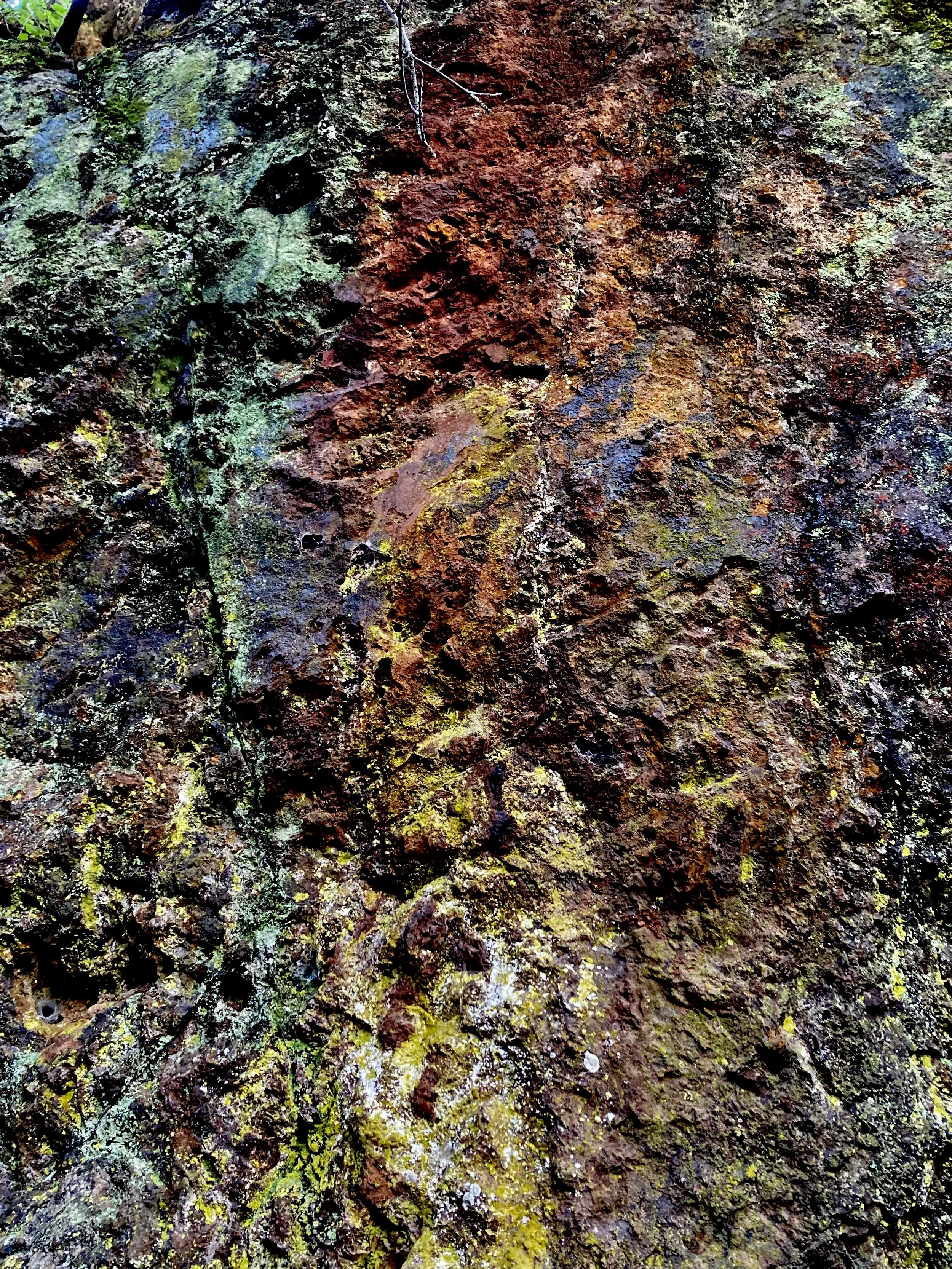
The wall of an old mine reveals the richness of the extracted materials, forming an abstract image with various colors—blue and green traces of malachite, orange hues of iron or copper, red clays, and hints of lime, among others.
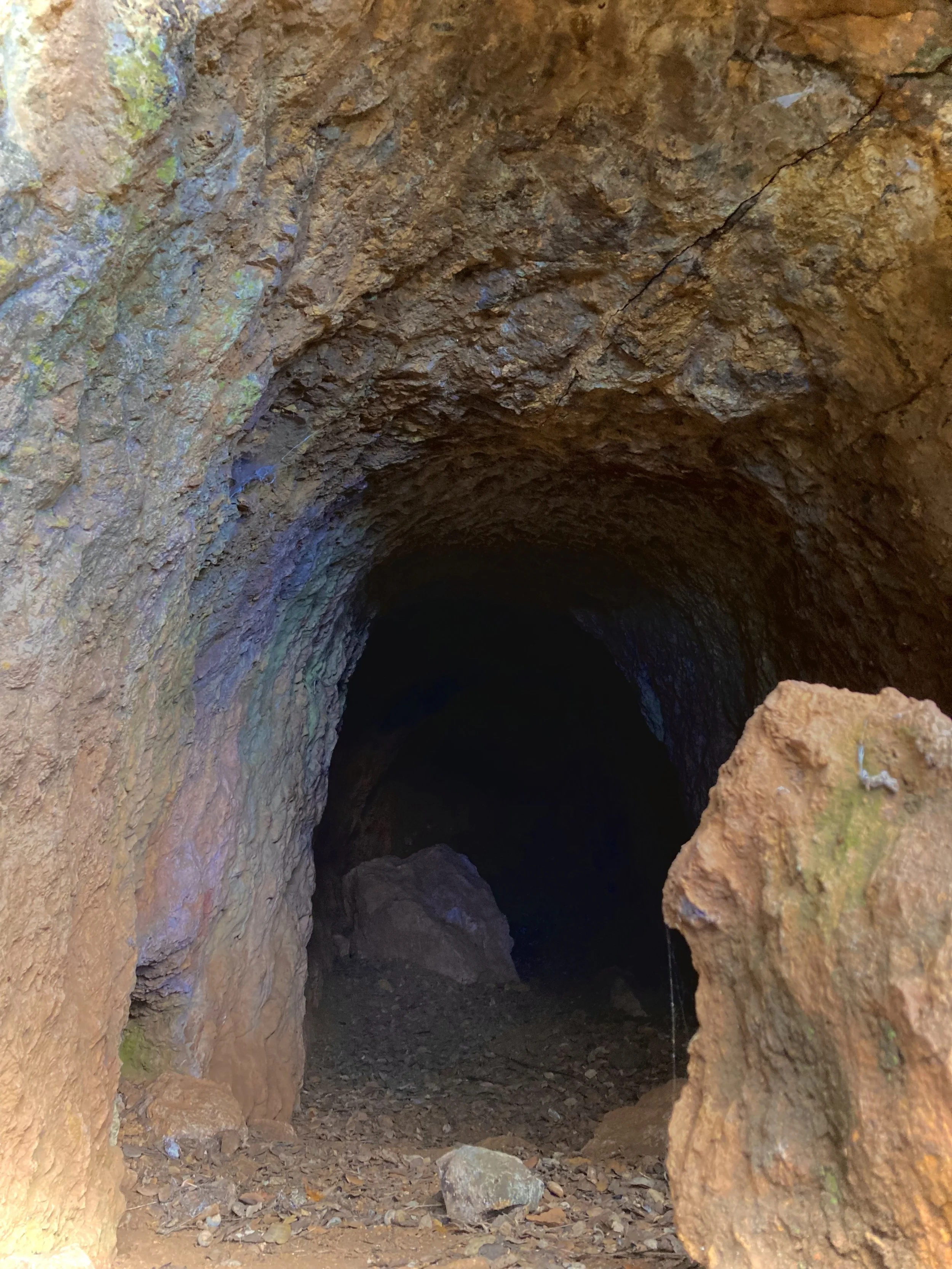
The entrance of an old mine carved into the rock, where lead residues turn the walls silver.