Where Water Once Measured Time
The Water Troughs of La Donaira
There are places at La Donaira where time has not stood still, but remains present in a quiet, almost imperceptible way. Spaces that do not seek to be the center of attention, yet hold within them the essence of everything that came before.
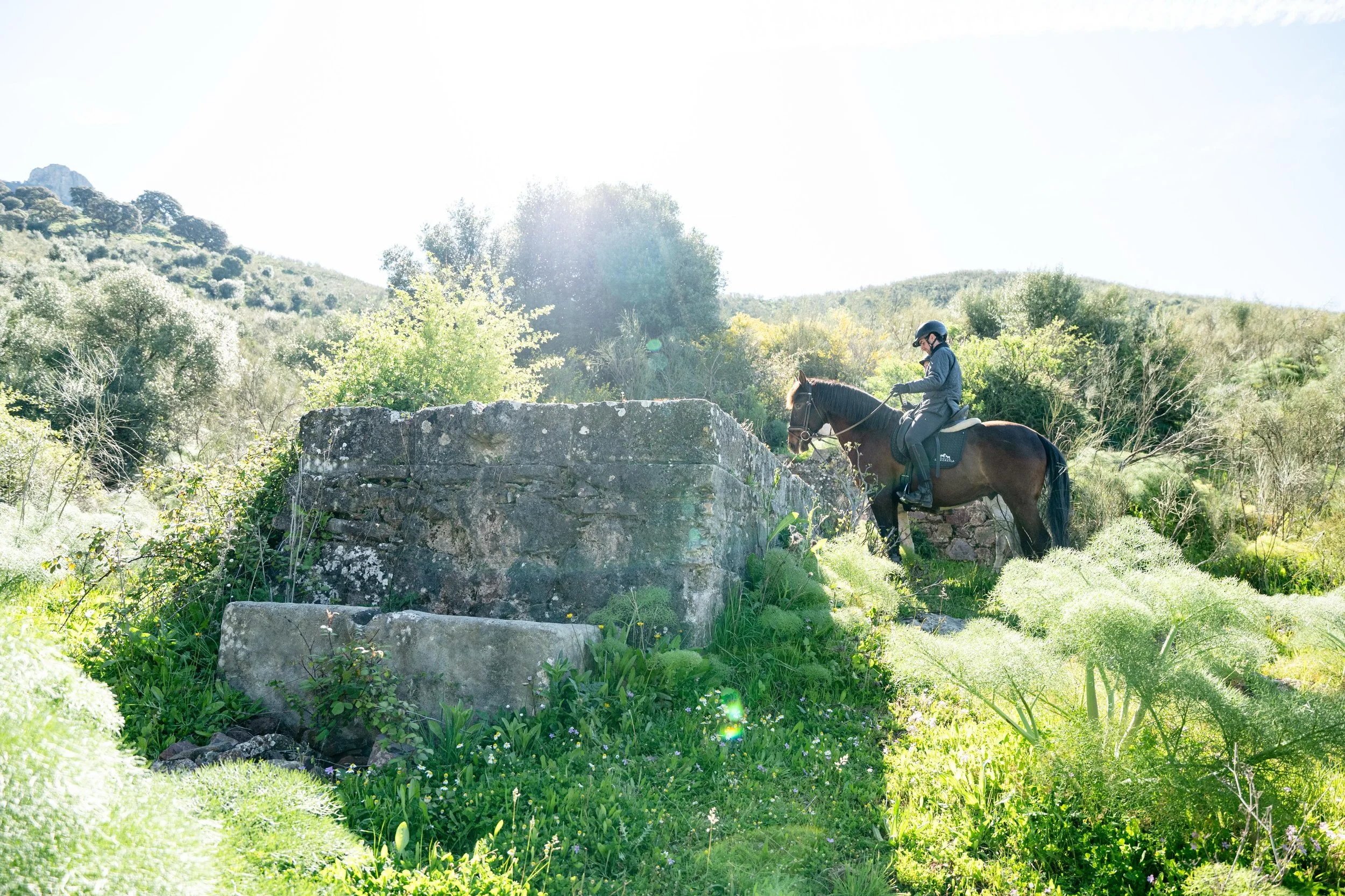
One of them is the ancient water trough, located along the historic path that once connected the villages of El Gastor and Montecorto. A route shaped by the steady movement of livestock, by journeys taken at a different pace, guided by the land itself. Today, the main track runs elsewhere, but if you look closely, you can still sense where that original path once lay—where animals moved, and where the rhythm of life was defined by water, rest, and the natural cycles of the landscape.
This trough, built between the late 18th and early 19th centuries, was far more than a simple source of water. It was a place of encounter, of pause, of balance. Its design speaks for itself: different levels and dimensions created to serve a variety of animals. Horses and cattle at the higher basin; goats, sheep, and smaller animals at the lower levels. A structure designed for coexistence between species—deeply practical, yet inherently respectful.
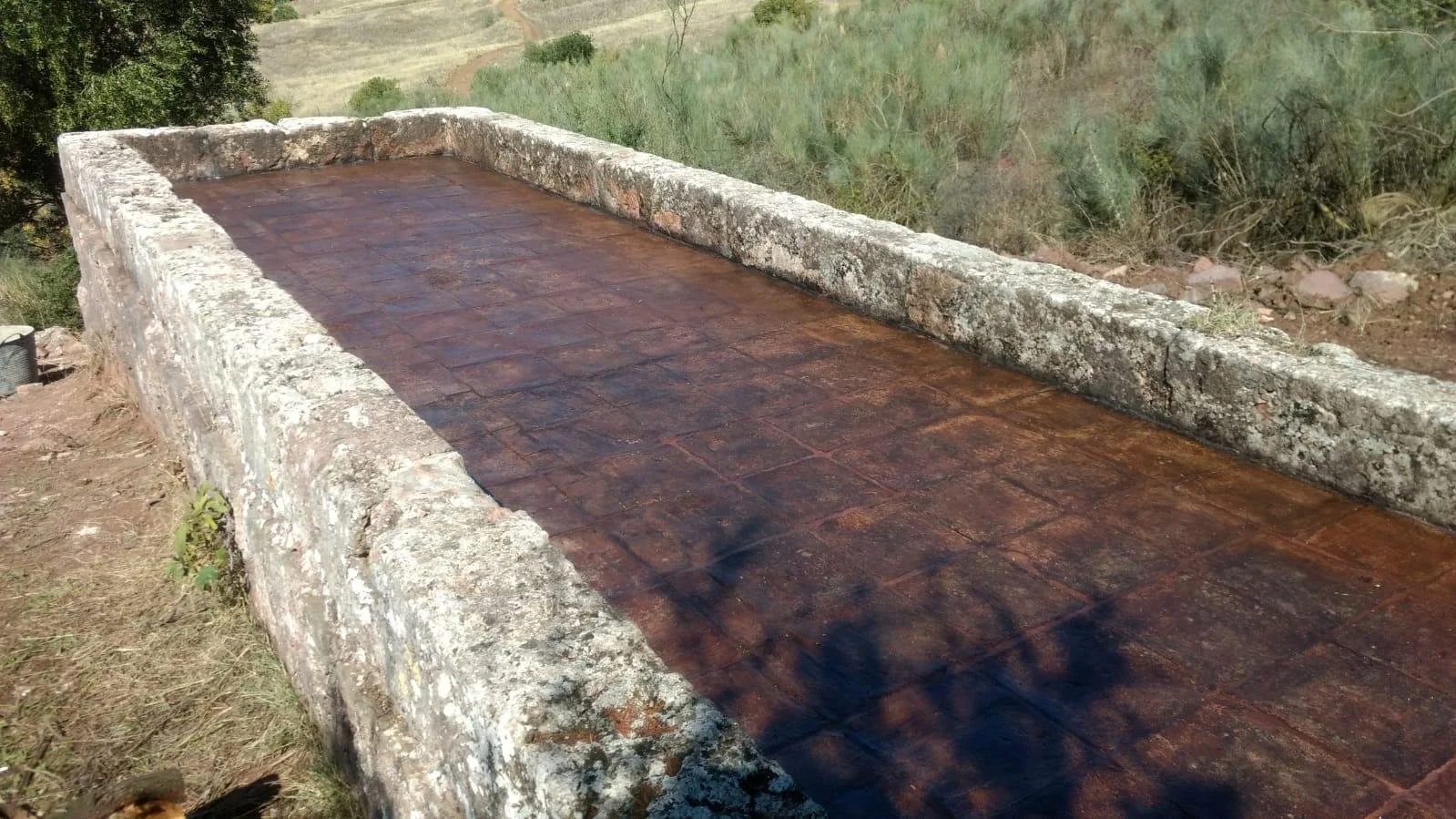
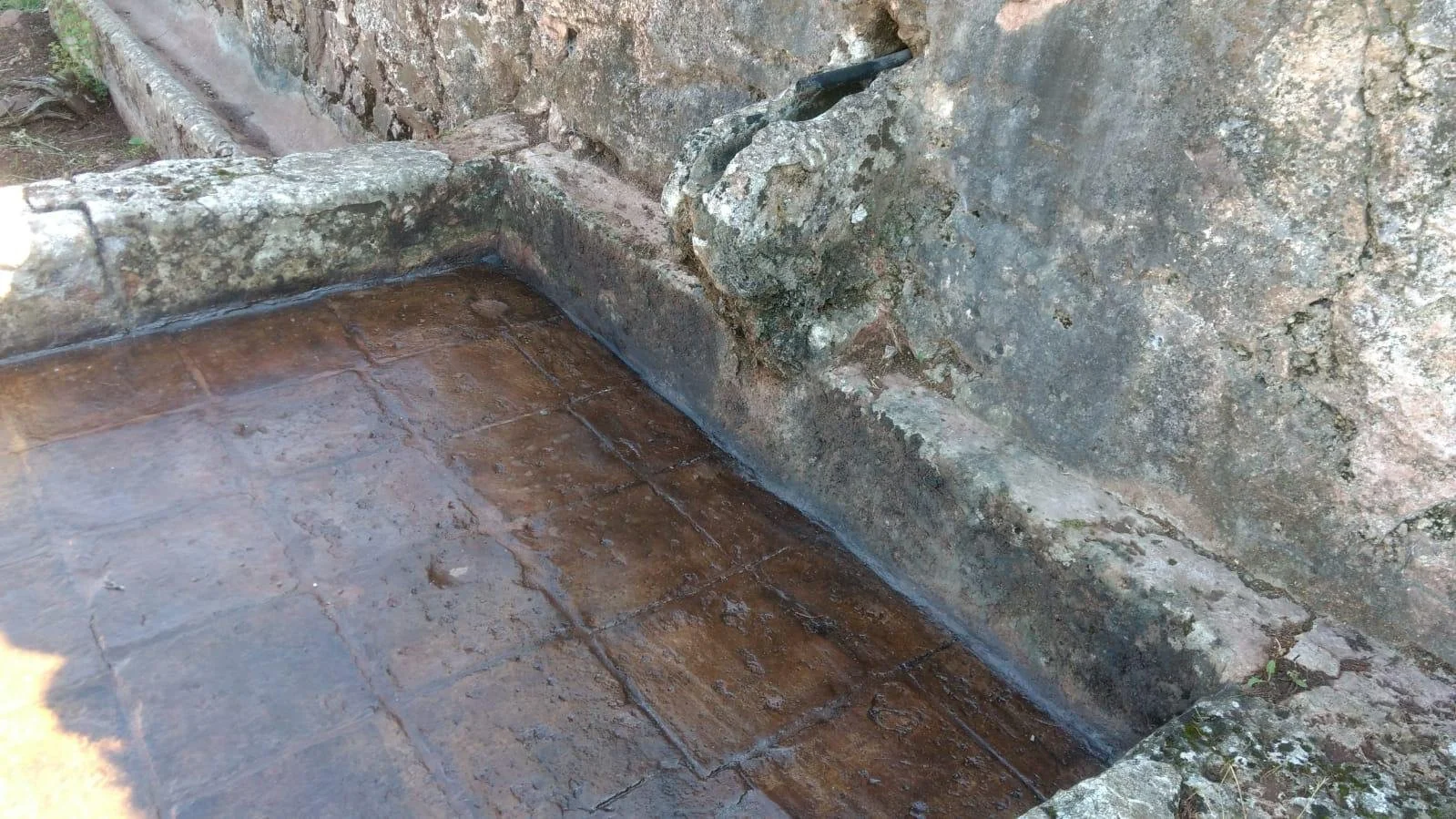
At first glance, it appears to be carved from ancient stone, shaped over time. But it is not. Built using lime mortar, it reflects a deep technical knowledge and an understanding of the environment. Each section interlocks with precision, forming a structure that has endured across generations. It was never intended to be aesthetic, yet it has become quietly beautiful.
Water once flowed here from a natural spring higher up in the mountains. A constant presence that gave meaning to this place. Over time, the channels shifted, and the water found new paths, leaving the trough dry. Yet even without water, its presence remains powerful. Because what endures is not only its function, but its memory.
Some years ago, it was carefully restored and cleaned—an essential act of preservation, not only of the structure itself, but of everything it represents. At La Donaira, we understand that the landscape is not only nature: it is also history, culture, and the human imprint woven into the land.
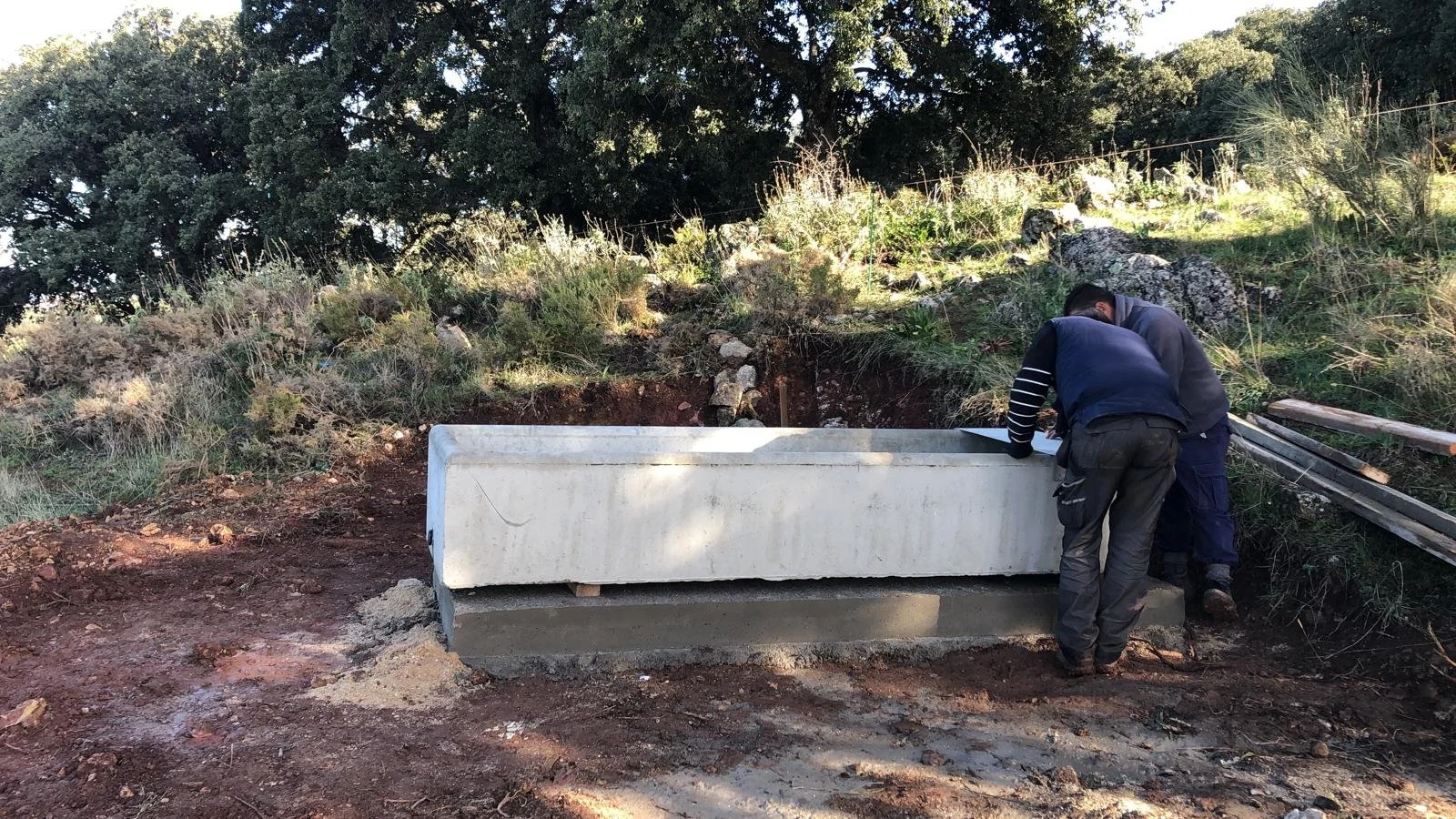
This is not an isolated example. Across the estate, there are more than a dozen troughs—some historic, others more recent. They are scattered along paths, hillsides, and former routes of movement, forming a quiet network that tells the story of how this land has been lived in for centuries. Places such as the trough by the Encina de Bodas, those near the lake, or along the old path towards El Horcajo, all form part of the same narrative.
A narrative in which water was both center and destination.
Today, walking through these spaces is a way of reconnecting with that slower rhythm, with a way of life in which every element had a clear purpose. Where the movement of livestock, the pause along the way, and access to water formed part of a natural balance we still strive to preserve.
At La Donaira, these troughs are not merely remnants of the past. They are reminders of a way of understanding the land—with respect, intelligence, and a deep connection to nature.
Because there are places where water no longer flows, but history remains alive.